EmberWave is not affiliated with, sponsored by or endorsed by The Mars Society, the URC organisers, Adelaide University or the ARCh organisers. Where a product differs from the official rules, guidelines or Q&A, the official documents win. All tools and templates are first-order planning aids, not yet compared with rover hardware data. Examples are illustrative.
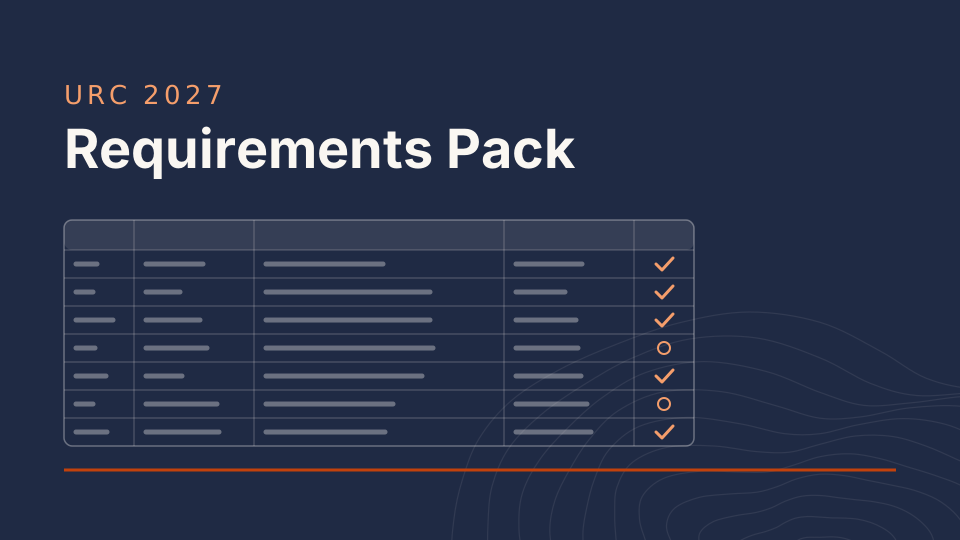
EmberWave URC 2027 Requirements Pack
The University Rover Challenge 2027 rules turned into 98 measurable requirements, plus a PDR outline for the 2 Dec 2026 deadline built from the 2027 rules (the official 2027 PDR requirements are not posted yet).
PDF, 25 pagesExcel, 98 requirements
What you get
A planning aid that turns the official University Rover Challenge 2027 Requirements and Guidelines into a working requirements list for your team. You get a 25-page PDF and an Excel workbook. The core is a 98-row requirements matrix with eight columns: ID, rule section, a summary of the rule, a measurable engineering requirement, verification method, evidence for the report, points at stake and the official source URL. Numbers your team must set are marked {{team value}}. The PDF also contains a scoring map of where points are won and lost, the official 2027 key dates with the gaps and conflicts found, mistakes documented by the organisers (each with a source), and a PDR outline mapped to matrix rows. The PDR is due 2 Dec 2026. The official 2027 PDR requirements were not yet posted when the pack was built on 2 Nov 2026, so the outline uses only Rules 2027 sections 3.a.ii and 3.c.i. Q&A rulings are included up to the 11 Oct 2026 update. The engineering requirements are first-order and are not yet compared with rover hardware data.
Who it is for
University teams entering URC 2027 who want to plan their PDR, SAR and Finals work against the 2027 rules, and team leads or advisors who need one list to assign owners and track evidence.
What it is not, files and FAQ
What it is NOT
- Not affiliated with, sponsored by or endorsed by The Mars Society or the URC organisers.
- Not an approval and not a judging prediction. It does not tell you that your design or report will pass.
- Not the official rules. It summarises them in EmberWave's own words and does not reproduce them; a paraphrase can miss detail. Where it differs from the official rules or Q&A, the official documents win.
- Not based on the 2027 PDR, SAR or Science Plan requirements, which were not yet published on 2 Nov 2026.
Files
- EmberWave_URC-2027_Requirements_Pack.pdf (25 pages)
- EmberWave_URC-2027_Requirements_Matrix.xlsx (one sheet, 98 requirements, 8 columns, filters on, header row frozen)
FAQ
The 2027 PDR requirements are not out yet. Is the pack still useful now?
The PDR date (2 Dec 2026) and the content the rules ask for (team structure, resources, project management plan with Gantt chart and initial budget, fundraising, recruiting, outreach, and the current state of design and prototyping) are in Rules 2027 3.a.ii, and the outline is built from those. Page limits, format and submission route are left open. When the 2027 PDR page is posted, follow it.
Is this an official URC document?
No. EmberWave is not affiliated with the organisers. Send rule questions to the official URC contact, urc@marssociety.org.
Will the pack be updated when new Q&A rulings appear?
This is a fixed version dated Nov 2026. Updates are not included. The pack states the date of every source it used, so you can check the official Q&A for anything newer than 11 Oct 2026.
All sales are final (digital files). If a file is damaged or missing, email hello@emberwavelabs.com and we replace it within 2 working days. See the Refund Policy.
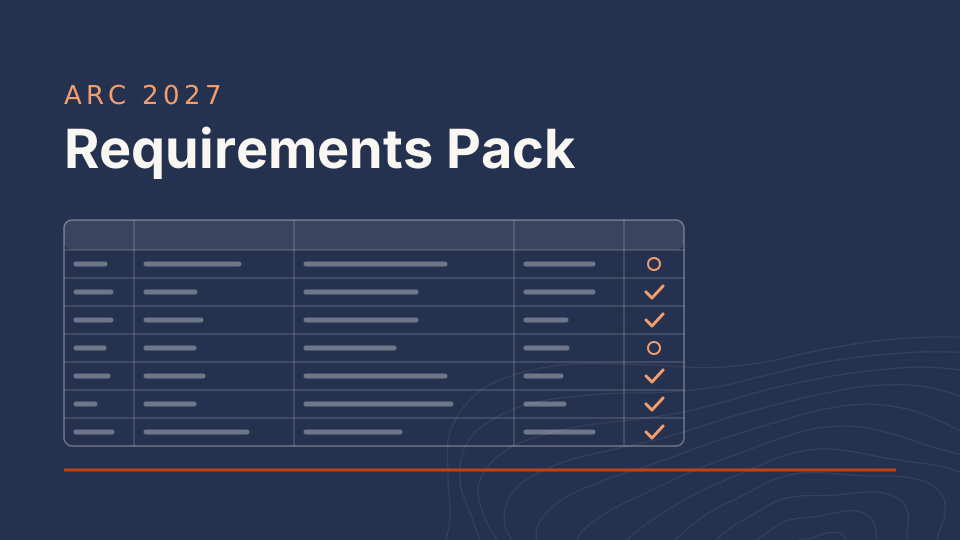
EmberWave ARC 2027 Requirements Pack
The Australian Rover Challenge 2027 rules turned into 104 measurable requirements, with the required SAR page layout for 5 Feb 2027.
PDF, 22 pagesExcel, 104 requirements
What you get
A planning aid that turns the official ARCh 2027 Rules and Regulations, Version 1.0 (14 Aug 2026), into a working requirements list for your team. You get a 22-page PDF and an Excel workbook. The core is a 104-row requirements matrix with eight columns: ID, rule section, a summary of the rule, a measurable engineering requirement, verification method, evidence for the report, points at stake and the official source URL. Numbers your team must set are marked {{team value}}. Three items the organisers say will change in a coming rules version are marked [CHANGE PENDING]. The PDF also contains a scoring map with the official weights and penalties, the 2027 key dates with the discrepancies found between official sources, mistakes taken from the organisers' own score reports and FAQ, and the SAR page layout required by the SAR Guidelines v1.0, mapped to matrix rows. The SAR report and proof-of-life video are due 5 Feb 2027, 23:59 ACDT. The engineering requirements are first-order and are not yet compared with rover hardware data.
Who it is for
Teams entering ARCh 2027 who are preparing the SAR, the proof-of-life video and the Requirements Verification Matrix appendix, and team leads who want one list to assign owners and track evidence up to the competition in March 2027.
What it is not, files and FAQ
What it is NOT
- Not affiliated with, sponsored by or endorsed by Adelaide University, the Andy Thomas Institute for Space Resources or the ARCh organisers.
- Not an approval and not a judging prediction. It does not tell you that your SAR will pass the entry check.
- Not the official rules. It summarises them in EmberWave's own words and does not reproduce the rulebook. Where it differs from the official rules, guidelines or FAQ, the official documents win. Only the latest rules version and the FAQ apply (Rules 2.11).
- Not based on Rules Version 1.1 or the 2027 Participant Handbook, which were not yet published on 2 Nov 2026.
Files
- EmberWave_ARC-2027_Requirements_Pack.pdf (22 pages)
- EmberWave_ARC-2027_Requirements_Matrix.xlsx (one sheet, 104 requirements, 8 columns, filters on, header row frozen)
FAQ
Can I use the matrix as my SAR Requirements Verification Matrix?
It is a starting point. The SAR Guidelines ask for ID, source, statement, success criteria, method and result. Add your own values and a result column, and check the official SAR Guidelines before you submit.
What happens when a new rules version comes out?
The organisers have said Version 1.1 will change the hose connector envelope, and that a future version will update rule 12.4.1 (E&A start zone) and rule 12.4.3 (E&A schematic timing). These three items are marked [CHANGE PENDING]. The newest official version always wins. Update policy: This is a fixed version dated Nov 2026. Updates are not included.
Is this an official ARCh document?
No. EmberWave is not affiliated with the organisers. Ask rule questions through the official ARCh contact listed in the rules.
All sales are final (digital files). If a file is damaged or missing, email hello@emberwavelabs.com and we replace it within 2 working days. See the Refund Policy.
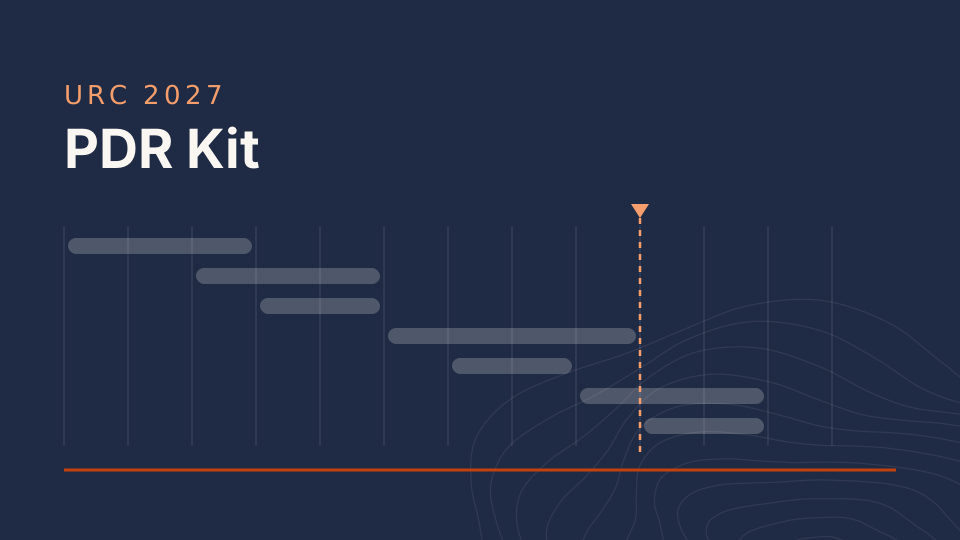
EmberWave URC 2027 PDR Kit
Everything the URC 2027 Requirements Pack has, plus a PDR report skeleton and an Excel workbook for the Gantt chart, the Project Budget Table, the USD 26,000 cost cap and the mass budget, for the PDR due Wed 2 Dec 2026.
On sale until 1 Dec 20263 PDFs2 Excel workbooks
What you get
A planning kit for the University Rover Challenge 2027 Preliminary Design Review. It includes the URC 2027 Requirements Pack unchanged (the same 25-page PDF and 98-row Excel matrix sold separately), plus three new files. The PDR Report Skeleton (PDF, 4 pages) is an illustrative structure built only from Rules 2027 sections 3.a.ii (Preliminary Design Review) and 3.c.i (Project Budget Table), with the official URC "Budget Tables and Gantt Charts" guidance: cover, team structure, resources, project management plan (Gantt chart, initial budget and Project Budget Table, fund-raising, recruiting, educational outreach), the current state of design, development and prototyping, and a short readiness summary. Every place your team fills in is marked {{team value}}. The Templates workbook (Excel) has a Gantt sheet with actual week-start dates from 31 Aug 2026 to June 2027, the official 2027 deadlines marked and a check on every task against the deadline it feeds; a Project Budget Table sheet in the order the official page asks for (income received, anticipated income, total income, expenses, forecast surplus or deficit); a Fielded cost cap sheet that checks your fielded-equipment estimate against the USD 26,000 cap with the valuation rule for each line (Rules 2027 3.c.iii to 3.c.x); and a Mass sheet that checks each mission against 50 kg and the fielded total against 70 kg (Rules 2027 2.a.iii), plus the 5 kg drone limit (2.b.vii). The Kit Guide (PDF, 4 pages) explains how the pieces fit together and a suggested order of work. The official 2027 PDR requirements were not posted when the kit was checked on 5 Nov 2026; when they appear, they override the kit. The templates are first-order planning aids and are not yet compared with rover hardware data or any judged PDR. Example tasks, budget lines and parts are illustrative.
Who it is for
University teams entering URC 2027 who are writing the PDR due 2 Dec 2026, and team leads, project managers and faculty advisors who need one integrated Gantt chart, one budget table and a cost-cap and mass check for the whole team.
What it is not, files and FAQ
What it is NOT
- Not affiliated with, sponsored by or endorsed by The Mars Society or the URC organisers. The official documents take precedence.
- Not a pass promise and not a judging prediction. The kit cannot predict or affect the judges' decision; Rules 2027 3.a.ii says judges assess each team on its own merits.
- Not the official rules and not the official 2027 PDR requirements, which were not posted on 5 Nov 2026. The kit summarises Rules 2027, the official URC 2027 Q&A and the official "Budget Tables and Gantt Charts" page in EmberWave's own words; a summary can miss detail. Where it differs from the official documents, the official documents win.
- Not a written PDR. The team writes its own report; the skeleton gives structure only.
- Not the official Rover Expense Report template (due 26 May 2027), which is on the official website and was not used for this kit.
- Not a power budget: the kit covers the Gantt chart, the budget and mass.
- This is a fixed version dated Nov 2026. Updates are not included.
Files
- EmberWave_URC-2027_Requirements_Pack.pdf (25 pages, unchanged from the URC pack)
- EmberWave_URC-2027_Requirements_Matrix.xlsx (one sheet, 98 requirements, 8 columns, unchanged from the URC pack)
- EmberWave_URC-2027_PDR_Kit_Guide.pdf (4 pages)
- EmberWave_URC-2027_PDR_Report_Skeleton.pdf (4 pages)
- EmberWave_URC-2027_PDR_Kit_Templates.xlsx (6 sheets: Read me, Key dates, Gantt, Project Budget Table, Fielded cost cap, Mass; plus a hidden Lists sheet that holds the drop-down values)
FAQ
The 2027 PDR requirements are not out yet. Is the kit still useful now?
The PDR date (2 Dec 2026) and what the PDR must cover (team structure, resources, a project management plan with Gantt chart and initial budget, fund-raising, recruiting, outreach, and the current state of design, development and prototyping) are in Rules 2027 3.a.ii, and the kit is built from those. Page limits, file type, section order and how to submit are not known and are not set here. When the 2027 PDR page is posted, follow it and restructure if needed.
We already bought the URC 2027 Requirements Pack. Is it inside the kit again?
Yes. The kit includes the two pack files unchanged. There is no upgrade credit.
Will the kit be updated when the organisers post the 2027 PDR requirements or new Q&A rulings?
No. This is a fixed version dated Nov 2026. Updates are not included. Check the official PDR page and the Q&A yourself before you submit.
Is this an official URC document?
No. EmberWave is not affiliated with the organisers. Send rule questions, including the deadline time and time zone (the rules give the date only), to the official URC contact, urc@marssociety.org.
All sales are final (digital files). If a file is damaged or missing, email hello@emberwavelabs.com and we replace it within 2 working days. See the Refund Policy.
- PDF + Excel + Word + Python
EmberWave Starter Kit: Planetary Rover Foundations
A 4-week guide, checklist, mass and power workbook, reading list and leg script to start your rover project.
Zip: PDF, Excel, Word, Python
What you get
The Starter Kit is for teams who want to go from "we want to build a rover" to a design they can defend in a review, in about four weeks.
The core is a 3-page guide. Week 1: write the mission and a requirements table where every requirement has a value and a way to verify it. Week 2: choose a locomotion concept with a weighted decision table, then run three first-order sizing checks (power to climb a slope, static tip-over, wheel size). Week 3: build the mass, power and energy budgets. Week 4: run the checklist, list your top risks, write a test plan and hold a design review. It ends with the 10 mistakes rover teams make most often.
The Excel workbook does the budget work: mass by item with contingency by maturity, a power budget by mode, battery sizing with reserve and depth of discharge, and a summary that warns you when the margin is gone. A filled example (illustrative numbers) sits next to the blank sheets.
The reading list gives 25 well-known references (terramechanics and more) with short notes and Google Scholar search links. No papers are included; use your library. The Word template gives a structure for your literature review. The Python script computes leg joint angles and static joint torques for a two-link leg, with a built-in self-check.
All methods are first-order and educational. They are not yet compared with hardware data, and every example number is illustrative. Replace them with your own data.
Who it is for
- Student rover teams at the start of a project or a new season.
- Master's and final-year students starting a rover thesis or capstone.
- Small teams who want a simple, written process before CAD.
What it is not, files and licence
What it is NOT
- First-order and educational: not yet compared with hardware data.
- Not an engineering sign-off and not a substitute for testing your rover.
- Worked examples are illustrative, not data from a real rover.
- Not a simulator; the Python script is a 2-D, quasi-static learning example.
- No research papers are included, only citations and search links.
What is in the download (EmberWave_Starter_Kit.zip)
- 01_Guide_Start_Your_Rover_Project_in_4_Weeks.pdf: 3-page week-by-week guide, with illustrative worked examples.
- 02_Rover_Design_Checklist.pdf: the 10-check Rover Design Checklist.
- 03_Mass_and_Power_Budget.xlsx: mass budget with contingency by maturity, power budget by mode, battery sizing, summary with warnings; blank sheets plus a filled example (illustrative numbers).
- 04_Annotated_Reading_List.xlsx: 25 references with notes and search links (citations only, no copies of papers).
- 05_Literature_Review_Template.docx: 7-section structure for a literature review, with a summary-table layout.
- rover_leg_kinematics.py: Python 3, no extra libraries; forward and inverse kinematics, Jacobian and static joint torques for a 2-link leg, with a self-check.
- README.pdf: file list, notes, support line.
Licence
One licence per buyer or team. Use it and adapt it for your own project. No resale, sharing outside your team, or redistribution.
All sales are final (digital files). If a file is damaged or missing, email hello@emberwavelabs.com and we replace it within 2 working days. See the Refund Policy.
EmberWave RoverKit Team v0.1.1
Python toolkit to compare wheel-legged rover designs: soil, slopes, tip-over, rocks, design sweep and Pareto front.
Python 3.9+ and numpy35 sanity testsCommand line
What you get
RoverKit is a Python toolkit for the first pass on a wheel-legged planetary rover. You describe a rover, a soil, a gravity (Mars, Moon or Earth) and a route in one JSON file. RoverKit returns a single-file HTML report plus CSV tables.
It covers: two-link leg kinematics and static hip and knee torques; wheel sinkage, compaction resistance and slip-dependent thrust with the Bekker-Wong soil model, with the slip solved on each slope; power, Wh per metre and route energy; static tip-over limits in pitch and roll; and the tallest rock the rover can cross. A design sweep runs every combination of the parameters you choose on the same seeded route, filters feasible designs, finds the Pareto front (energy, obstacle height, stability margin) and ranks them with weights you can edit.
It needs Python 3.9+ and numpy only. Three commands: demo, init-config and run. The package includes 35 sanity tests, two example configs, an illustrative sample report, and MODEL_NOTES.pdf with every equation, assumption, limit and reference.
Be clear on what it does well: it compares design options against each other on the same soil and route. Trust the order of designs more than the absolute numbers. The models are first-order and closed-form, not yet compared with hardware data, and not a multibody or DEM simulator. Read MODEL_NOTES.pdf before you quote any number.
Who it is for
- Rover teams choosing between wheel-legged design options (wheel size, leg lengths, hip height, wheelbase, track) before CAD.
- Students and engineers who need first-order numbers for soil, slope, tip-over and obstacles, with the equations written out.
- Teams comfortable running a Python command and editing a JSON file.
What it is not, files and licence
What it is NOT
- First-order: not yet compared with hardware data.
- Not an engineering sign-off and not a basis for safety-critical decisions on its own.
- Not a multibody, DEM or dynamics simulator; static and steady-state only.
- Soil values are tabulated literature values; the lunar soil entry is an approximate placeholder.
- The examples and sample report use invented, illustrative rovers.
- No graphical interface; it runs from the command line or Python.
What is in the download (EmberWave_RoverKit_Team_v0.1.1.zip)
- roverkit/: the Python package (kinematics, terrain, terramechanics and stability, energy, sweep, report, command line).
- tests/test_roverkit.py: 35 sanity tests (run with
python -m unittest discover -s tests -v).
- examples/baseline_study.json and examples/lunar_scout_study.json: ready-to-run configs (illustrative rovers; the lunar one has a placeholder custom soil to replace with your data).
- examples/sample_report/: an illustrative sample output (report.html, designs.csv, slope_table.csv, invalid_designs.csv, study_used.json).
- README.pdf: install, run, config and Python usage.
- MODEL_NOTES.pdf: equations, assumptions, limits, references, and a cross-check note against an open-source tool.
- LICENSE.txt: licence terms, support line.
- pyproject.toml: so you can
pip install it locally.
Licence
One licence per buyer or team. Use and modify it for your own projects, studies and commercial work. No resale, sublicensing, publishing or sharing outside your team.
All sales are final (digital files). If a file is damaged or missing, email hello@emberwavelabs.com and we replace it within 2 working days. See the Refund Policy.
- PDF + Excel + Word + Python
EmberWave Team Season Bundle: URC 2027
Three tools to start the URC 2027 season on paper: a 4-week design process, a Python toolkit to compare wheel-legged rover designs, and the 2027 rules turned into 98 measurable requirements.
Starter KitRoverKit Team v0.1.1URC 2027 Requirements Pack
What you get
Three EmberWave products in one purchase, for one team.
- Starter Kit: Planetary Rover Foundations. A 3-page, week-by-week guide from mission and requirements (week 1) to locomotion choice and three first-order sizing checks (week 2), mass, power and energy budgets (week 3), and a checklist, risk list, test plan and design review (week 4). It comes with the 10-check Rover Design Checklist, an Excel mass and power budget (contingency by maturity, power by mode, battery sizing, a summary that warns when the margin is gone, plus a filled example with illustrative numbers), an annotated reading list of 25 references with search links (citations only, no papers), a Word literature review template, and a Python script for two-link leg kinematics and static joint torques with a self-check.
- RoverKit Team v0.1.1. A first-order Python toolkit for the first pass on a wheel-legged planetary rover; its models are not yet compared with hardware data. You describe a rover, a soil, a gravity (Mars, Moon or Earth) and a route in one JSON file; RoverKit returns a single-file HTML report plus CSV tables. It covers leg kinematics and static hip and knee torques, wheel sinkage and slip-dependent thrust with the Bekker-Wong soil model, power and route energy, static tip-over limits in pitch and roll, and the tallest rock the rover can cross. A design sweep filters feasible designs, finds the Pareto front (energy, obstacle height, stability margin) and ranks them with weights you can edit. Python 3.9+ and numpy only. It includes 35 sanity tests, two example configs, an illustrative sample report and MODEL_NOTES.pdf with every equation, assumption, limit and reference.
- URC 2027 Requirements Pack. A 25-page PDF and an Excel workbook that turn the official University Rover Challenge 2027 Requirements and Guidelines into a 98-row requirements matrix (ID, rule section, rule summary, measurable engineering requirement, verification method, evidence for the report, points at stake, official source URL). The PDF adds a scoring map, the official 2027 key dates with the gaps and conflicts found, mistakes documented by the organisers, and a PDR outline for the 2 Dec 2026 deadline built from Rules 2027 sections 3.a.ii and 3.c.i (the official 2027 PDR requirements were not yet posted when the pack was built on 2 Nov 2026). Q&A rulings are included up to the 11 Oct 2026 update.
How they fit together: the URC pack tells you what the rules ask for, the Starter Kit gives the team a process and budgets to answer it, and RoverKit lets you compare design options against each other on the same soil and route before CAD.
Who it is for
- University teams entering URC 2027 who are planning the PDR (2 Dec 2026), the SAR and the Finals work.
- Team leads and faculty advisors who want one process, one requirements list and one design-comparison tool for the whole team.
- Teams comfortable running a Python command and editing a JSON file (needed for RoverKit only).
What it is not, files, FAQ and licence
What it is NOT
- First-order and educational. The models, budgets and engineering requirements are not yet compared with hardware data. Trust RoverKit's order of designs more than its absolute numbers, and read MODEL_NOTES.pdf before you quote any number.
- Not an engineering sign-off, not a design review of your rover, and not a basis for safety-critical decisions on its own.
- Not a multibody, DEM or dynamics simulator; RoverKit is static and steady-state only, with no graphical interface.
- Not affiliated with, sponsored by or endorsed by The Mars Society or the URC organisers. The URC pack summarises the official rules in EmberWave's own words and does not reproduce them; where it differs from the official rules or Q&A, the official documents win.
- Not based on the 2027 PDR, SAR or Science Plan requirements, which were not yet published on 2 Nov 2026.
- Every worked example, sample report and filled example uses illustrative numbers or invented rovers. Replace them with your own data.
- No research papers are included, only citations and search links.
Files
- EmberWave_Starter_Kit.zip (guide PDF, checklist PDF, mass and power budget .xlsx, reading list .xlsx, literature review template .docx, rover_leg_kinematics.py, README.pdf)
- EmberWave_RoverKit_Team_v0.1.1.zip (unpacks to EmberWave_RoverKit_v0.1.1/: the roverkit Python package, 35 tests, two example configs, an illustrative sample report, README.pdf, MODEL_NOTES.pdf, LICENSE.txt, pyproject.toml)
- EmberWave_URC-2027_Requirements_Pack.pdf (25 pages)
- EmberWave_URC-2027_Requirements_Matrix.xlsx (one sheet, 98 requirements, 8 columns, filters on, header row frozen)
FAQ
Where should our team start?
Read the URC pack's key dates and PDR outline first, because the PDR is due 2 Dec 2026. Then follow the Starter Kit's 4-week guide, and use RoverKit in week 2 when you compare locomotion and sizing options. Start RoverKit with README.pdf, then python -m roverkit demo --out demo_output.
Is this an official URC product?
No. EmberWave is not affiliated with the organisers. Send rule questions to the official URC contact, urc@marssociety.org.
Will the URC pack be updated when the 2027 PDR or SAR requirements, or new Q&A rulings, appear?
This is a fixed version dated Nov 2026. Updates are not included. The pack states the date of every source it used, so you can check the official pages for anything newer than 11 Oct 2026.
Licence
One licence covers one team. Your team may use and adapt all files for its own projects and studies (RoverKit also for your own commercial work, as its LICENSE.txt says). No resale, sublicensing, publishing, redistribution or sharing outside your team (except the Rover Design Checklist, which is free to share with its footer kept). The software and templates are provided as is; RoverKit must not be the sole basis for safety-critical decisions, regulatory approval or final design sign-off.
All sales are final (digital files). If a file is damaged or missing, email hello@emberwavelabs.com and we replace it within 2 working days. See the Refund Policy.
 EmberWave